Showing posts with label PVA. Show all posts
Wednesday, 19 March 2014
Putting it in real life
I decided that next step I should take was to put my models into the real world to show how they would be used. I took my sock to the shop on Cuba street and placed it next to the other sock so you could see the difference between my sock and theirs. how mine could stand alone and look more realistic.
PVA Shirt
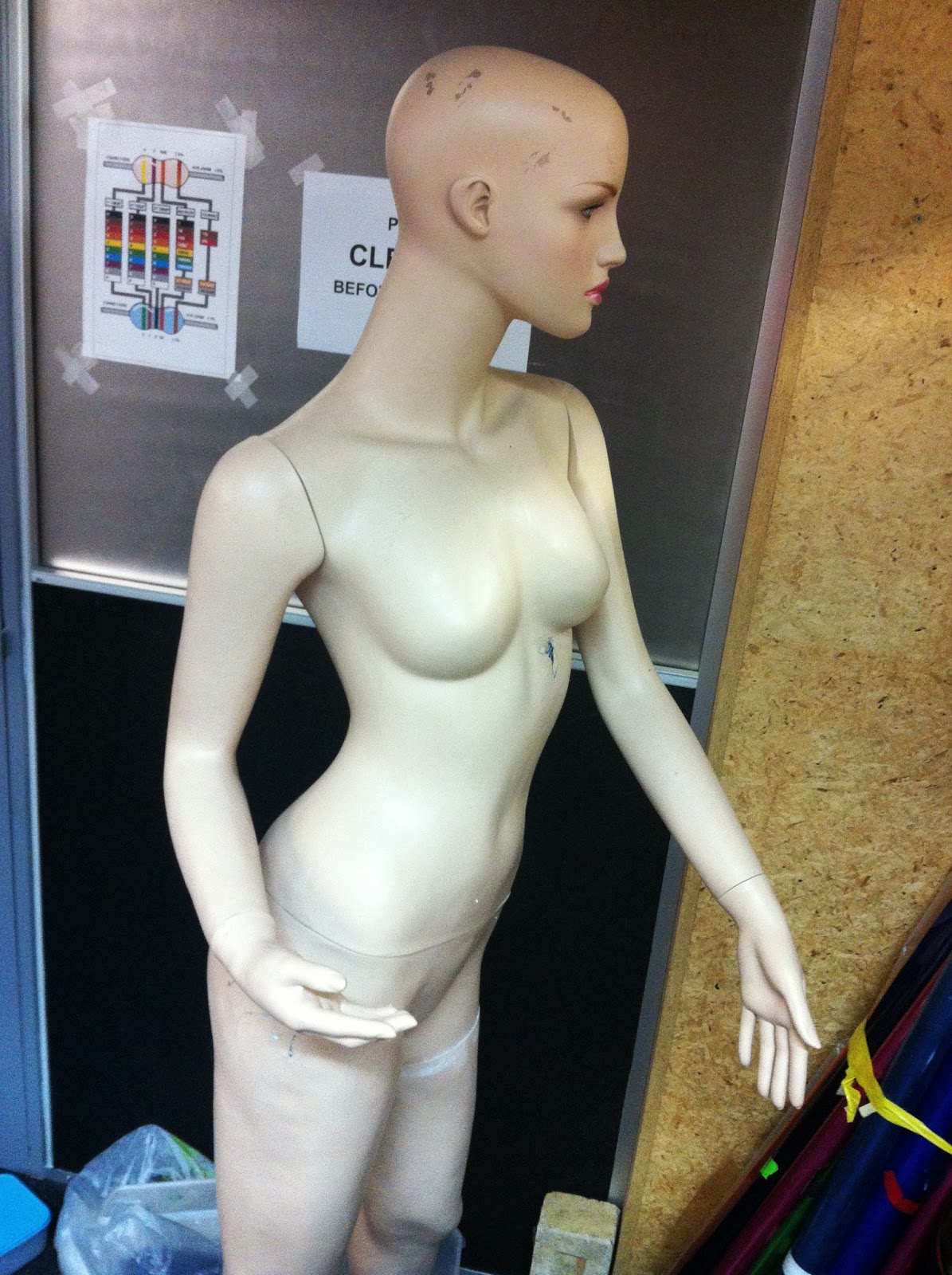
after the sock turned out well I wanted to try it on a bigger scale to see if it would work in a larger object, I also wanted to try molding it on a manikin as I found it hard to mold it on my self as I had to keep my self very still for the whole molding process as it became very difficult. I molded a shirt;
I had to do about four coats over the shirt to make it stiff enough to support its self and keep its shape. it required quite a lot of effort to pull the shirt off once the PVA had set but I found that once it was off i could form it back into the shape I had set it into and it held its shape well.
Examples where my application could be used
I was walking down Cuba street today and I was looking in a shop window at the different displays and how they arranged them to advertise their stock and one of the shop windows court my eye;
The sock was propped up using paper to look like it was being warn. this is the exact reason for my application, if they used PVA to mols the sock they wouldn't need the paper and it would look more visually appealing and more realistic as it would take the actual form of the sock.
Sunday, 16 March 2014
applying PVA to an application
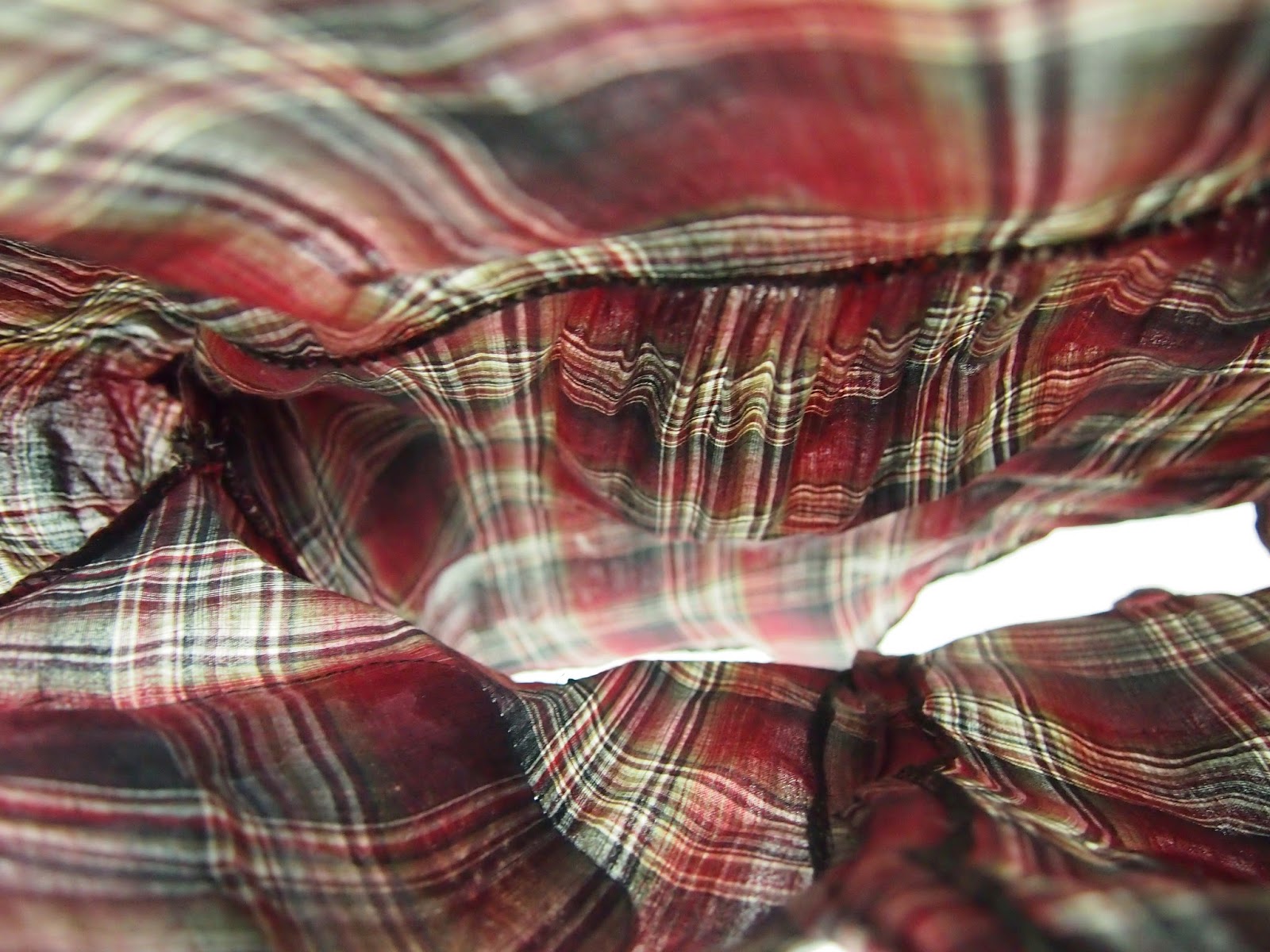
I wanted to see how to apply PVA to a real life application so see how it could be used in the real world. I wanted to push the idea of putting it in clothing to result the clothes to mold into a form you molded it into, I though about the Idea of putting starch into shirts before they are sold so they keep their shape and when the customer takes it home they wash it into its original tactual property. I wanted to take this idea a step further by putting the clothes into its 3D form as if someone it wearing it by socking the clothes in PVA. I felt that its idea could be used as shop displays so you could see how the garment is warn without needing a mannequin or for online and catalog photos so you wouldn't need a model to show how the clothes look in the 3D position. but then to get it back to its wearable state you can just wash it out as PVA is water soluble.
I felt that I should test my idea to see if it would work, I tried with a small garment, a sock;
I felt I should start with something small as then could get a feel of how many layers of PVA I would need and know what parts would need more PVA to create the garment to stand alone. I thought a sock world be easy, but I found it probably not the best choice. To get the best result from PVA on cloth you have to prevent the mold from moving and using your own foot as the mold made it very hard to keep it at the same angle throughout the whole molding process. I found it took hours to make the PVA strong enough to stand on its own, I had to do it over three days and 100's of coats, the first day was easy as the PVA absorbed fast and dried fast as their was a grater ratio of cloth the PVA, but when taking the sock off it could not stand alone, it was more like an unwashed sock, had some stiffness to it but couldn't keep a 3D form.
Day two to a bit longer to absorb into the cloth as there was already PVA in the cloth, this time I wasted to see what would happen if I put the PVA/boric acid solution into the sock. I found that it made a thicker paste though the sock, it was more difficult to absorb and dry but it made it stronger, I rubbed it into parts of the sock that needed more support like the sides of the sock and the heal, the part that would take most of the weight and needed the most molding. I found this day harder to take the sock off when it had dried as it had taken its from a bit more. it still couldn't stand on its own but you could see a shape forming.
On day three I found it quite hard to get the sock on as the PVA had prevented the sock to have any elasticity it it. I did about 5 more coats of PVA on the sock focusing on the areas which weren't strong enough to stand alone. Day three took the longest to dry as their was less cloth for the PVA to absorb into but I could feel the sock taking form around my foot. The hardest part came when the PVA had dried and that was to take the sock off my foot. As the PVA and molded around my foot an had given the sock a lot of strength and stiffness and also lost a lot of elasticity it was extremely difficult to remove the sock, but with a lot of careful tugging I got it off and it could stand alone.
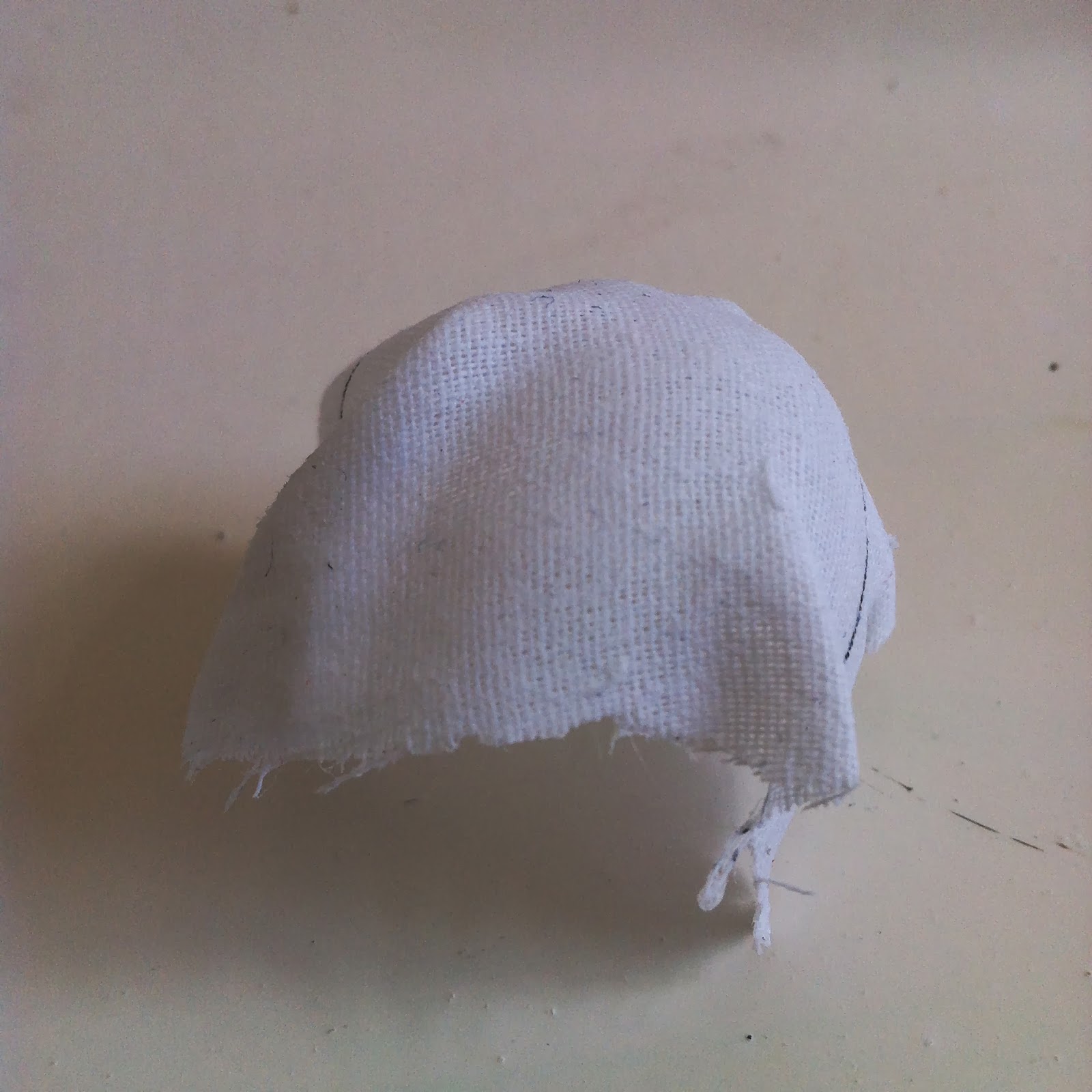
As I had to pull it off my foot I feel that it had lost some of its iconic foot shape as I had pulled it at certain parts making them weaker thats why it is slightly wrinkly on the higher parts and also why some of the foot part caves it. this wouldn't of happened it I could some how get my foot out without putting tension on the form. I feel to get this to look perfect as if a foot is sitting inside I would have to have some kind of mold that would easily and cleanly come out of the sock with out inserting tension on it. but as a whole you can see where my would was with curves in the sock like around the toes and the arch on the sole. It also stands alone which is the main point of this application.
I felt that I should test my idea to see if it would work, I tried with a small garment, a sock;
I felt I should start with something small as then could get a feel of how many layers of PVA I would need and know what parts would need more PVA to create the garment to stand alone. I thought a sock world be easy, but I found it probably not the best choice. To get the best result from PVA on cloth you have to prevent the mold from moving and using your own foot as the mold made it very hard to keep it at the same angle throughout the whole molding process. I found it took hours to make the PVA strong enough to stand on its own, I had to do it over three days and 100's of coats, the first day was easy as the PVA absorbed fast and dried fast as their was a grater ratio of cloth the PVA, but when taking the sock off it could not stand alone, it was more like an unwashed sock, had some stiffness to it but couldn't keep a 3D form.
Day two to a bit longer to absorb into the cloth as there was already PVA in the cloth, this time I wasted to see what would happen if I put the PVA/boric acid solution into the sock. I found that it made a thicker paste though the sock, it was more difficult to absorb and dry but it made it stronger, I rubbed it into parts of the sock that needed more support like the sides of the sock and the heal, the part that would take most of the weight and needed the most molding. I found this day harder to take the sock off when it had dried as it had taken its from a bit more. it still couldn't stand on its own but you could see a shape forming.
On day three I found it quite hard to get the sock on as the PVA had prevented the sock to have any elasticity it it. I did about 5 more coats of PVA on the sock focusing on the areas which weren't strong enough to stand alone. Day three took the longest to dry as their was less cloth for the PVA to absorb into but I could feel the sock taking form around my foot. The hardest part came when the PVA had dried and that was to take the sock off my foot. As the PVA and molded around my foot an had given the sock a lot of strength and stiffness and also lost a lot of elasticity it was extremely difficult to remove the sock, but with a lot of careful tugging I got it off and it could stand alone.
Wednesday, 12 March 2014
Ideas for PVAp
I want to see how I can put PVA into a real life situation and wanted to use the idea of forming it with cloth. When I think of cloth I think of clothing garments and different ways to push that idea;
- The first thought of shirts, and when they are in the store they have starch on them to keep them crisp and to keep their shape. but when you wash the shirt the starch washes out making the shirt more comfortable to wear. I thought about thinking this Idea further and using PVA intead of starch to create a different quality. I felt that if you soaked the clothing in PVA you could mold it into the shape of someone wearing the garment, this could be used for an avant-garde shop display. Or for catalogs and websites to indicate what the item looked like without using a model and it wouldn't ruin the garment as you could wash it out once no longer needed to keep its shape.
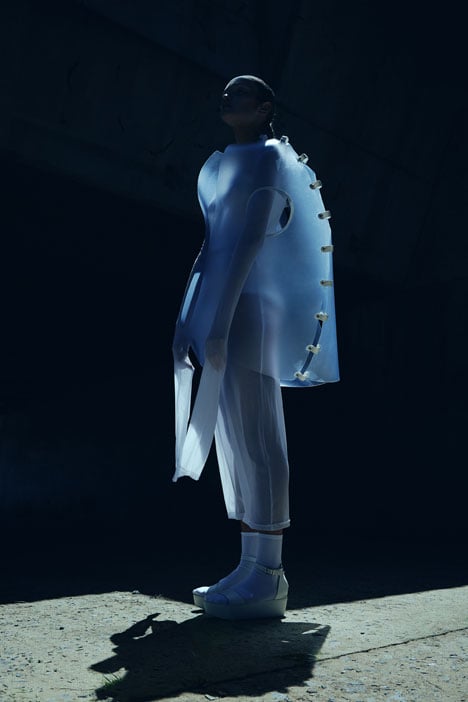
- another idea I had was to use PVA on one use garments like costumes or gowns, as these garments are one off products you want them to stand out and look unique, so you could use PVA to crate unique forms and shapes to the fabric but still lets you move in the fabric and it will come back to its molded shape. It is also light and breathable to an extent.
PVA experiments.3
I had liked the idea of mixing PVA with cloth and how it could keep its shape when molded into a form, but it was still had moveable and soft tactile properties, so I wanted to see how far I could push this Idea by mixing the solution with different substances and see if they would change the physical properties of PVA acting on cloth.
I decided to see what Boric Acid and Isopropyl Alcohol (100% alcohol) did when reacted with PVA;
I first tried Isopropyl Alcohol, when I poured the PVA pallets straight into the alcohol a reaction between the two products did not occur, I even left it over night to see if it was a slow reaction process but still the PVA did not react with the alcohol.
I then tried making the PVA react with water then adding the alcohol into the solution, it created a unique reaction, when I poured the Isopropyl Alcohol into the solution the PVA particles reacted with the alcohol and formed little sediments on the top of the liquid.
I then wanted to see what would happen if I socked the cloth into this solution and mold it into a form, I thought that since it made a unique reaction with the alcohol it might change its qualities when acting on the cloth. but I found that it did not change the tactile qualities of the cloth, it was still stiff and held the same shape.
I concluded that Isopropyl alcohol didn't noticeable change the qualities with PVA acting on cloth.
Next I tried reacting PVA with Boric Acid;
First I tried print the PVA pallets into the boric acid solution and I found that they didn't to dissolve into the solution and bonded together and sat at the bottom of the liquid. So next I poured PVA dissolved in water solution into the Boric Acid and then socked that mixture into cloth and molded it out to see if it it had any noticeable changes.
But I found just like the Isopropyl Alcohol it did not change the tactile properties of the PVA acting on the cloth, it was still stiff and kept its shape.
I had noticed that over time the PVA pallets that I had put in to solution had softened and enlarged, it had absorbed the Boric Acid and where now soft and stick, I felt that they resembled cottage cheese as they and kept their form and hadn't turned into a liquid state.
I wanted to see if I put this substance in the cloth would it change the qualities, I found it difficult to push the pallets into the cloth as it was thick and sticky, but once in the cloth it held the form well.
The Boric Acid had changed the physical properties of the PVA and had changed the way it acted on the cloth, intend of socking into the cloth in was more like a paste and and to be painted onto the cloth, it was thick and could be seen on the cloth. I felt that the visual properties had changed as now you could see it and I feel that it is not very visually appealing and to put it bluntly it looks like bird shit.
In one of the first experiments I did with PVA and water I found out that when you left the PVA and water solution over a long period of time the substance separated making the PVA particles to fall to the bottom making it a thicker substance, I felt that I would try and see if I used the thicker substance with the cloth and painted on a few coats would it be noticeable diffract when acting on the cloth.
I found that it had made the Cloth mold thicker and stronger but still had some give to the cloth but would still come back to the form it was molded into, unlike the Boric Acid mold this substance socked into the fabric meaning it gave a cleaner finish and wasn't as noticeable on the cloth as it didn't sit above the cloth.
Sunday, 9 March 2014
more PVA experiments
I decided to to a few more experiment to get a greater understanding of the limitations of the compound.
my first experiment I put it into nail polish remover to see if it would react with the Acetone but nothing happened, over the space of three hours the acetone evaporated and the PVA pallets were left behind, they had become sticky like when reacted in water but it did not dissolve into the acetone.
I next wanted to see what would happen if I dissolved the PVA in water then used the milky substage and interacted it with other materials. I first tried paper, and poured the solution onto the paper, I felt that it didn't really react with the paper, it socked through the paper like any other liquid but then just sat on top and did its own thing, when dried it have the paper some stiffness and a shine to it, but nothing noticeably interesting.
my first experiment I put it into nail polish remover to see if it would react with the Acetone but nothing happened, over the space of three hours the acetone evaporated and the PVA pallets were left behind, they had become sticky like when reacted in water but it did not dissolve into the acetone.
I next wanted to see what would happen if I dissolved the PVA in water then used the milky substage and interacted it with other materials. I first tried paper, and poured the solution onto the paper, I felt that it didn't really react with the paper, it socked through the paper like any other liquid but then just sat on top and did its own thing, when dried it have the paper some stiffness and a shine to it, but nothing noticeably interesting.
I then tried the same technique but with cellophane, I tried pouring the solution onto the cellophane and painting it on with a paint brush and then left them to dry, like the paper nothing unusual happened with this reaction, the PVA didn't change the retain between water and cellophane.
I then decided I will play around with colours so I used some of my PVA solution and mixed it with water colour paints and then applied it to paper. this reaction turned out more interesting as when it dried it didn't sock into the paper like water colored paints would on there own, it had some depth to it and sat slightly above the page, it was crisp and had a shine.
I next wanted to see what would happen it I mixed the solution with dishwashing liquid, not much changed with the reactive properties but I wanted to see what would happen when you put bubbles though it because when you put bubbles though just PVA and water nothing formed, so I forced air though the solution and bubbles formed, I was hoping for them to stay up for longer but they popped shortly after, I felt that PVA didn't change the reaction and it would of happen regardless of PVA being in the solution.
My last experiment i found quite interesting and unique, for this I got sheets of cloth and dipped them in the water and PVA solution and then dried them with a hair drier to decrease the drink process. I found that it would drying in the position that you formed it in, for example I dried one of the cloth pieces over a circular lid and when it tried it was formed in the shape, it also has some give in the movement you could move it gently and it will come back to the position, I also tried coloring it with water paint and it colored well. the only problem I found it that you couldn't layer it. The PVA didn't act as a glue, when laying up the sheets and then letting them dry it was easy to pull them apart from each other. It was more like origami you could fold the cloth but you couldn't bound them together.
Wednesday, 5 March 2014
PVA Ideas
I wanted to think of different ideas to use PVA in different contexts, I found that this was quite a hard thing to think off, I knew that it was food safe but should avoid swallowing the compound.
I came across this cool Idea called Moss Graffiti where you use moss to crate an organic may to crate Art on a space. I thought that if people didn't like it they could just spray it down and it would wash away so I thought you could use this concept with PVA and you could find away you make graffiti with it and over time the PVA wold dissolve with the rain water and wash away therefore it would per permeant and the space could be used for something else.
The problem that I would find with PVA is the look of it, the reason why I found the moss graffiti so intriguing was the fact that it was an organic art form and it uses both human and nature to crate it, while if you did the same with PVA it is only human input. it also would look as visually appealing being the colour and texture it is, you would have to come up with a way to make it different colours and to not make it so sticky when it is racing with the water.
I came across this cool Idea called Moss Graffiti where you use moss to crate an organic may to crate Art on a space. I thought that if people didn't like it they could just spray it down and it would wash away so I thought you could use this concept with PVA and you could find away you make graffiti with it and over time the PVA wold dissolve with the rain water and wash away therefore it would per permeant and the space could be used for something else.
The problem that I would find with PVA is the look of it, the reason why I found the moss graffiti so intriguing was the fact that it was an organic art form and it uses both human and nature to crate it, while if you did the same with PVA it is only human input. it also would look as visually appealing being the colour and texture it is, you would have to come up with a way to make it different colours and to not make it so sticky when it is racing with the water.
Polyvinyl Alcohol.
For this assignment was have to experiment with the chemical compound of Polyvinyl Alcohol (PVA) A colourless, water-soluble synthetic resin.
To see how it worked I wanted to see its featuers in action:
First I wanted to see how long it took for PVA to dissolve in water. I cut a small piece (less then 1cm squared) and placed it into a small dish of distilled water, I thought it wouldn't take very long for the reaction to occur, but in the first five minutes nothing happened I even tried moving the water around to make the reaction work faster but it still didn't dissolve, but when touching it, it was no longer smooth and hard but more flexible and slightly sticky and gluey. I then left it for three hours and came bak and it had finally dissolved and made the water no longer clear but a milky colour and then over night the water then separated and the PVA had fallen to the bottom and settled.
The next Idea I wanted to look in to was to see if I could get the PVA to work into a paste by only using a little about of water. After time the PVA did dissolve into the limited amount of water making it into a sticky and gluey texture but it still held its form and was not forming a paste. Over night the water evaporated from the PVA resulting in the PVA that had dissolved into the water to harden back into the solid state, but in a thiner form. I found this pro sees rather interesting as you could use this concept to make the PVA into different forms and thicknesses by evaporating the water.
Next I wanted to see if PVA was soluble in other liquids, the two I tried was oil and salt water, I put the same sized piece of PVA that I put into the water to see if in the same time frame would anything happen. I have had the PVA in the solutions for three days now and no reaction has started to occur. this then proves that PVA is not soluble in salt water or oil. this could help in my design as I know how to prevent the reaction if I don't want the reaction to happen for some reason.
I had also heard that PVA burns like paper, I would of really liked to try this but I don't own matches or a lighter, but I think it was some good inside to know that PVA is flammable. When I get my hands on a lighter I will give it a try.
To see how it worked I wanted to see its featuers in action:
![]() |
| Polyvinyl Alcohol |
![]() |
| textuer when reacted with water |
![]() |
| In water |
![]() |
| over night the PVA had separated from the water |
The next Idea I wanted to look in to was to see if I could get the PVA to work into a paste by only using a little about of water. After time the PVA did dissolve into the limited amount of water making it into a sticky and gluey texture but it still held its form and was not forming a paste. Over night the water evaporated from the PVA resulting in the PVA that had dissolved into the water to harden back into the solid state, but in a thiner form. I found this pro sees rather interesting as you could use this concept to make the PVA into different forms and thicknesses by evaporating the water.
![]() |
| in limited water |
![]() |
| over night after water had evaporated |
Next I wanted to see if PVA was soluble in other liquids, the two I tried was oil and salt water, I put the same sized piece of PVA that I put into the water to see if in the same time frame would anything happen. I have had the PVA in the solutions for three days now and no reaction has started to occur. this then proves that PVA is not soluble in salt water or oil. this could help in my design as I know how to prevent the reaction if I don't want the reaction to happen for some reason.
![]() |
| PVA in oil |
![]() |
| PVA in salt water |
Subscribe to:
Posts (Atom)