Showing posts with label precedents. Show all posts

Sunday, 23 March 2014

Creation of Creators

For this project I have to think of an idea to make a product that will produce a creation, though the idea of manufacturing and 3D printing. I have to think about these ideas; Can you make something that exists in a provocative/better/different/beautiful way? How will it change the current way of making? How will it affect the way of using? 
I felt the first step to finding an idea was to look at what has recently been published to get an idea of the different approaches I could take, 
The first one I found was on Designboom; océ 3-D fine art reproductions 
"built a photographic scanning system which captures high-resolution, three-dimensional images of fine art paintings. through a data-to-print process, canon’s océ group, which specializes in large format printing, has translated the scans into identical reproductions of some of the most recognized and renowned master works." I found this concept very unique as it found a new way to replete famous pieces of artwork it brings the copies to life and gives them more depth and accuracy then any other copy.
I then found 3D printed LEGO wedge completes chipped 
designer greg petchkovsky bended nature with 3D printing by  integrated them inside the volume of the chipped off corner to make it seem as if the block was made from the iconic building blocks. I liked this concept it is short and sweet, taking the flaws in nature you don't even notice and making it so you can see them in a unique playful way. 
The last one I found was on Design Milk ; An innovative catenary pottery printer By GT2P
"The printer was born out of a desire to create standard machines that generate non-standard results by mixing the normal numerical control with traditional material and techniques. It reintroduces the idea that parametric design isn’t necessarily always a digital computation methodology. The pottery printer is an analog machine that uses computational logics and automation processes to form pottery. With the combination of all these factors, the machine can create a variety of objects, from tableware to candle holders to even hanging lights. This pottery printer is more than just a machine—it allows gt2P to speak about parametric design without computers and digital fabrication laboratories." 
I really liked this concept with the fact that even though it was manufactured it still made unique one of a kind objects that couldn't be replicated perfectly, it gave an organic quality with the use of shapes and forms and the uniqueness of each bowl. I also liked the fact that unlike all the other 3D printers it doesn't use digital programing to make the products, its made purely with human interaction. 

Monday, 10 March 2014

precedents 311

For this assessment we are required to make a highly resolved and detailed design project. 
I will communicate through form, surface finishes, sounds, lighting and balance with each of these elements offering design opportunities. In this project I will develop an understanding of how to communicate clearly and poetically through these qualities to create a consistent, deliberate and detailed design language. I will analyse the existing markets to isolate issues and opportunities which will form the basis of your design response. This project will allow me to create diverse yet highly resolved experiments. These experiments will include form language, surface/material and interface. This process will conclude with a product which will clearly exhibit (to potential employers specifically) your capabilities and personal style.

 A variety of precedents:
I found that I really liked designing and making kinetic interactive products, ones that can stand on their own and be easily played with with out instructions.
The first precedent I came across was Kinetic Creatures 

I really liked the interactive qualities that these toys had the way the user had to make the toy to use it and could then experience how it worked, it is striped down to its essential components, one of the visual aspects is to see how it works. 

I then looked at Theo Jansen Strandbeest 


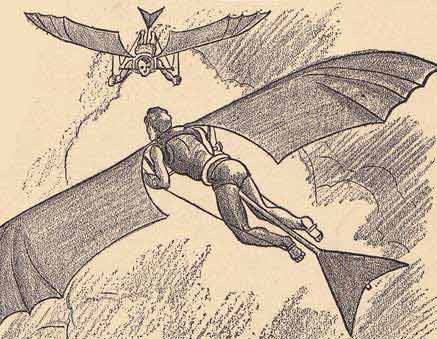
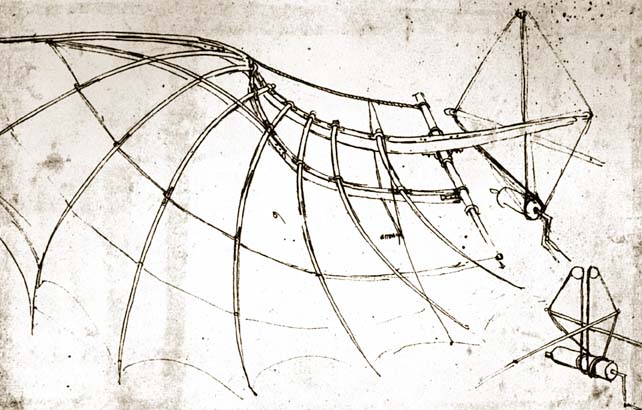
Leonado Da Vinci Flying Machine
Theo Jansen Shapeways 3D printed model 


Mine Kafon

"'Wind Knitting Factory' is a wind-powered knitting machine. The blades embrace more than a meter in diameter, and the wind caught by them powers the machine. In this way it is possible to knit a long scarf. When it is windy the machine knits fast and with less wind, the machine knits slowly. Occasionally the knitwear gets 'harvested' and transformed into scarves. Every scarf gets a label that tells you the date and time on which the wind made it. This mobile wind factory illustrates a production process and it visualises what you can produce with the present urban wind." 

Monday, 23 September 2013

Skiing.


I have the hobby of going skiing and love the freedom of the sport and a part of the joy of the sport is the adrenaline of risk taking, so in a way safety has to be kept at a minimum but now days it is becoming more common for people wear more safety gear such as helmets and some snowboarder wear wrist guards to prevent strains, but me personally don't like waring the helmets i find them quite heavy on your head and don't breath well so by the end of the day you have a sweaty head, I also feel that their is a fashion/status element when you are on the mountain as you just don't look as good with a helmet, if you aren't a pro you come of as bit of a wimp or just to over protective. But I do find them kind of useful as the last time I went skiing I bailed on a run and landed on my head which not only hurt but also resulted it not being able to move my neck for a week and I know that people have died while on the mountain and they would of survived if they were wearing a helmet like actress Natasha Richardson who died in a skiing accident for not wearing a helmet.


I would like to design a helmet that wasn't noticeable and was breathable as I find that the temperature of the mountain changes rapidly throughout the day, it is normally cold in the morning and on a good sunny day you are hot by lunchtime, and always find my head and chest area are the first to over heat (the head heats up after with a helmet of as it isn't breathable and also heavy and restricting so heat is contained inside it). so if I had a helmet that could keep your head warm in the cold wind and mornings but could also not over heat your head in the sun.

I found a website that looked at different skiing and snow boarding injuries and it describes that head injuries is the most fatal and can have the worst outcome, can end up with death or severe head injuries. 'Individuals who have sustained serious head injuries often need advanced airway procedures such as intubation and ventilation in order to maintain adequate levels of oxygenation. Additional complications can include respiratory depression, seizures (fits) and associated spinal injury. If the brain has been badly damaged, bleeding both in and around the brain can occur and the brain itself can swell. This is a real problem, because the brain is encased in a solid case (the skull) which has no vent for this increased pressure. The brain therefore gets squeezed by this increasing pressure which damages it still further. All in all, not good. Unfortunately, as a result, serious head injuries, even with appropriate management, frequently result in death or permanent and significant disability.'  There are three main outcomes that can result in a head on accidentCollisions - either with another person or an object (e.g. tree, rock, fence, pylon, snow surface), Impacts with snow surface (e.g falls onto a hard snow/ice surface or jumps that go wrong) or Lift accidents (e.g hits on the head from swinging T-bars, chairs or poma buttons). so there are many factors that could go wrong if you are not careful. 
head injuries account for at most 10-20% of all snow accidents but I feel it is the most dangerous.
Over the last 10 year in the USA there has been 39 deaths on the slops due to head injuries, and 30 of them were skiers and of the 39 eight of them were reported to be wearing helmets, so it shows that helmet do save the lives but do slow down the chances. 
There are also arguments against wearing the helmet, it suggest that wearing a helmet puts strain on the neck and makes you more prone to next injuries, it also states that helmets affects your vision as you cant see a wider range as you cant see on your sides. As you have the helmet on squashing on your head and coving your ears it is thought that your hearing is more impaired  I have found this when trailing the helmet, I did find it more difficult to hear. and also it is thought that when wearing a helmet  you are more prone to take more risks as you feel you will be fine if land on your head  the "risk compensation theory"


I looked it what ski helmets are made from and I found a web site that explained the different types of padding inside the helmets and what they feel are the safest type of helmet. http://www.allsportprotection.com/Types_of_Ski_Helmets_s/662.htm;
EPS
 EPS (Expanded Polystyrene). Low-profile and light in weight, EPS foam liners are the industry standard for action sports. EPS liners are not multi-impact, but they do meet CE/CPSC standards. 
SXP from Pro Tec
 SXP (Surface Activated Expanded Polypropylene). Patented multi-impact material that is ideal for aggressive riding style. Multi-impact SXP liners have built-in rebound control. Once the liners have been compressed, multi-impact SXP memory kicks in and the liner rebounds, maintaining its impact-absorbing qualities. Multi-impact SXP are the only lightweight multi-impact helmets to be CE/CPSC-certified and still deliver the style and fit that customers deserve. 
SEPP/EPP from POC
 SEPP (Super Expanded Polypropylene) / EPP (Expanded Polypropylene). The difference between the materials is that SEPP and EPP, unlike EPS do not deform permanently on impact and is therefore suitable to absorb repetitive shocks. Meaning, essentially that an EPS liner will break, distributing the force from the impact throughout the helmet. The EPP and SEPP are similar in that they will also break when the maximum force of impact occurs, but SEPP and EPP have higher stress limits when it comes to breakage and flex. 
Hard Hat Brock Foam from Bern Unlimited

 Bern Hard Hat is an interior foam called Brock Foam. Brock Foam is a soft, very comfortable foam that is rated as a multiple impact foam. When an impact occurs on a Brock pad, each bead moves the adjacent two beads laterally which diffuses the impact. Friction between the beads turns much of the force into kinetic energy. Multiply this by the thousands of beads in each pad and you have the essence of why Brock absorbs impact better than standard foam pads. It is made up of a polypropylene bead that offers a firm protective layer and has excellent moisture and heat wicking properties.
Brock foam is not certified ASTM or CE for skate, snow or bike. The helmet is still a great helmet, but you do need to be aware of this fact. 

Zipmold from Bern Unlimited
 The Bern Zip-Mold is what other companies will often call an in-mold helmet. The Bern Zip-Mold is similar in build to an EPS helmet except the outer shell and inner shell are combined into one during the manufacturing process. This allows for a better strength to weight ratio and gives the helmet a lower profile without losing its protective qualities. 


Most of this didn't make much sense to me in if I want to make my own as I don't really know how to get ahold of the different polypropylenes or how to work with them so I felt I would go for a different approach on making one and thought about changing the materials and form, if I want it to be breathable and to protect your head. I kind of want to mix the normal hat with the helmet; I don't think it it would be a helmet good for the risky skiers or the ones that jump off cliffs but a step up form the the beanie.


I then looked into the precedent that was given in class the Hovding- airbag for cyclists, using the airbag concept to make a cycling helmet, The airbag is designed like a hood and made in an ultra-strong nylon fabric that won’t rip when scraped against the ground. Hövding protects nearly all of the head, while leaving the field of vision open.

The inflated airbag covers a much larger area than a traditional cycle helmet and is designed according to current accident statistics. The protection is greatest where it is needed most and the airbag provides extremely soft and gentle shock absorption. The pressure remains constant for several seconds, making it able to withstand multiple head impacts during the same accident. After that the airbag slowly starts to deflate.
I think the problem with this helmet when it comes to skiing as it wont work as effectively is that it is more common to fall over on skis then it is on a bike as I feel that this type of helmet is more of a one it thing and then would have to spend some time to sit and put it back in and make sure it is ready to go off again, and I feel that the force you fall of a bike is different then on skis and it would be hard to deuterium if you are fall over or just flying down the mountain at top speed. also this helmet is designed not be be on your head most of the time and have your head exposed to the elements which isn't ideal for skiing as you want to keep your head warm in -0 temperatures. But it is a good precedent as it shows a different way to make a helmet then just the normal with a Polypropylene inside and hard plastic shell. 


I then looked at different types of helmets out there not designed for skiing but designed to protect your head. and I thought about rugby and boxing headgears, they aren't made out of hard plastic, they are soft flexible and breathable. they aren't the look I want to go for but they are good to protect your head on impact, so its a good indication to know where to put the points needing most protection. 

Saturday, 14 September 2013

Wax light

I came a cross the light one night as was really inspire by it, on how such as simple concept had a looked so unique and could stand out so strongly. So i felt i would change my idea for my light to use this as a precedent,


I really liked the fluid organic forms and movement the wax makes when the the light it on. I enjoy how a harsh shape of the way the wax starts with moves into soft unpredictable shapes as it melts down. I love the warm coloured light that comes though the wax and the different shadows and brightness it creates in the different thicknesses of the wax and when the wax melts away the light becomes stronger. 
another part of the light that fascinated me was the way the wax was reused, it was designed so the wax would drop in to a cup below the lighting fixture and would remold the shape of the wax so it can be re used. the problem with this is I don't think it would work properly as air would become trapped in the bottom case and it wouldn't dry flat on the top so it would never look the same as the original, but I guess that the fun and uniqueness of it.
I would use the concept of wax and light as I feel that those are two strong complainants together and its quite a unique way to show different aspects of light and lights don't just produce light but some lights such as halogen lights also produce heat. I would play around with what way the wax falls (falling off the frame or having it above the frame and have it fall around it) or i could get it to fall on to something like fall into water or fall onto an uneven surface to adjust the way the wax would form.

Monday, 29 October 2012

Project 3 DSDN 112

PRECEDENTS


 I felt that I liked the idea of making a stop motion as I felt it would be an effective way to present my movie. I looked into stop motion videos on you tube and vimeo for ideas on how to make it and I really liked the the theme where they make stop motion out of paper, I felt that it would reflect my app well as my app is made out of text. i liked theres videos from vimeo;
http://vimeo.com/2295261,
http://vimeo.com/3715286,
http://vimeo.com/15263537,
http://vimeo.com/5020134,
http://vimeo.com/41519839
all of these videos use paper to create stop motion, some give the vintage feel which I like as if reflects my app, while others use different colours of paper to contrast the different imagery and to make it bold and stand out.

FIRST IDEA

My first Idea is to make a 3D world made out paper with words on it, such as magazine or news paper pages and have stop motion of a cut out of a person walking through it to reenact my app


 I made two of the walls to trial it but I felt to execute this well it would require a lot of time so i felt i should simplify my idea.

IDEA TWO

my second idea was to make people out of paper such as news paper or magazine paper as it would reflect my app. I felt that they would be easier to stop motion then making the 3d world in my first idea. I first made silhouettes of people but i felt if i made them they would take time as each movement i would have to cut out a new person.
so i tried to make a cut out of a person which moved so i made different parts that moved such as arms and legs and then put pins in them so they could move. after making one in white i felt i should make one that contrasted with it as i could use an off white background like my app and then the person wouldn't stand out. So I made one in red. I haven't figured out how I could incorporate them. 


i made a small stop motion to show how i could make them walk.

STORYBOARD

this is my story board i felt i would make it simple. in the movie i want ti to walk through what the app can do. with a person being lost and writing on the wall saying they are lost, I felt that she should write on the wall as I felt it reflected my app as it incorporated the idea of using words as a main idea. they would then place the phone on the ground and the app would fold out of the phone the would then play till the main screen then go back to them saying they cant find there friend then would show how they found how they are on campus and then from there would stop motion of them walking with the walls will have a overlay of text just like the app but putting in on the actual walls on kelburn. 

WALLS

in my movie i want there to be iteration with the user and the app such as opening the app and showing how they use it. but also have things that happen 'in the real world' to relate back to the app. the two ideas i have come up with is having the user wright on the walls saying that they are lost, so the audience knows that they are need something to help them direct them on where to go. 
Also in my app when it goes into 3D view it has the walls made up of text and this text tells them where to go and where they are located. I want to incorporate this idea into my app by having stop motion of the user walking though kelbun and have text overlaying the walls

I am a small stop motion to see how it looked, I found that this was very time consuming as on each frame i had to move the text and then line it up to where it was stilling in the previous frame. I also found that there was to much going on when I had them up and you lost focus on the person walking. 


FLASH

I had great trouble with Adobe flash this time around, It spent most of the time freezing or quitting which resulted in me spending hours trying to export the movie parts of my app in to quick time so i could try make my movie in iMovie which worked with less tantrums

ADD ON'S

I added a new part to my film that I didn't put in my story board. I felt that i should explain to the user what each main button did so I had the sham hands used in my app to point on each option and tell the user and audience what each button did.


MUSIC

I spent ages trying to find the best sound to fit my film, I wanted a tune that was happy and quirky as i felt it would give a positive spin on the film. I decided on a tune that i found on http://freemusicarchive.org a song by Oskar Schuster called Sneeuwland

MY FILM

My film is found on my Vimeo Account https://vimeo.com/52429863

Monday, 17 September 2012

inspring image

I stumbled across this photo of art work by Christlicher Garten, I felt that this work helped reflect my idea of what I want to do. As he uses text to contract walls and ceilings to create this unique path way. This helps we see how I can do door ways and tangent hallways.

Monday, 20 August 2012

finding other navigation apps

I wanted to see what another navigation apps were out there, to see how they were set up; I found websites explaining there best apps and videos expelling how the apps worked. most if not all of the apps are on road navigation rater then navigation within buildings but it still gave me ideas on how others set out there navigation apps.

http://www.readwriteweb.com/archives/6-navigation-apps-that-go-the-extra-mile.php
and
http://gizmodo.com/5656790/the-best-navigation-apps
are both websites that had what they believed were the best narration apps around for smart phones and tablets, these apps were designed to help the user to get from one place to another, some tell you the fastest route and others give an update on what is happening on the road so helps you to choose the most efficient route to take to avoid things like road works, traffic or cop stops.

from this I went and found videos on some of the apps, to see how they tried to sell there product:
waze is an app were it relies on the users to help each other on the road, you can tell other users were traffic is and why it is being held up, even the map is set up by people diving down the road with the app on, people can change the name on roads and streets if they are spelt wrong, this app is based around the people that use it.


I also looked google maps an iPhone as it is the most common navigation app around


I found that google maps was easy to use with the use of gestures to move around and zoom in and out. Also it had different settings which the user can choose to depend on their preference. I also liked their graphics it the way that it gave the sense that the page lifted up to change the settings. the last thing that I liked about google maps was the fact that if you have your internet on it can work out were you are and find you the best route yo take form your current location.

I also found a website that had invented a way to help people find there way through a building http://www.mobilemag.com/2012/05/07/indoor-sensor-allows-navigation-inside-buildings/
this way people can find there way through building on different levels.

Thursday, 17 May 2012

3D printing precedents


I also looked at 3d printing examples to see what other people had made with the printer, get inspiration and see what my limitations were.