Monday, 10 March 2014

precedents 311

For this assessment we are required to make a highly resolved and detailed design project. 
I will communicate through form, surface finishes, sounds, lighting and balance with each of these elements offering design opportunities. In this project I will develop an understanding of how to communicate clearly and poetically through these qualities to create a consistent, deliberate and detailed design language. I will analyse the existing markets to isolate issues and opportunities which will form the basis of your design response. This project will allow me to create diverse yet highly resolved experiments. These experiments will include form language, surface/material and interface. This process will conclude with a product which will clearly exhibit (to potential employers specifically) your capabilities and personal style.

 A variety of precedents:
I found that I really liked designing and making kinetic interactive products, ones that can stand on their own and be easily played with with out instructions.
The first precedent I came across was Kinetic Creatures 

I really liked the interactive qualities that these toys had the way the user had to make the toy to use it and could then experience how it worked, it is striped down to its essential components, one of the visual aspects is to see how it works. 

I then looked at Theo Jansen Strandbeest 


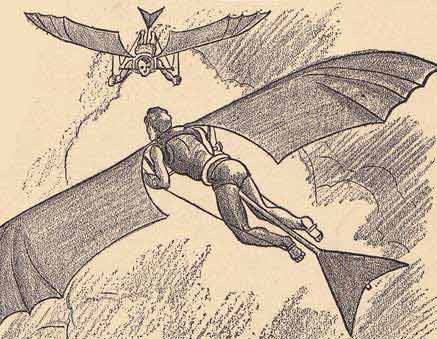
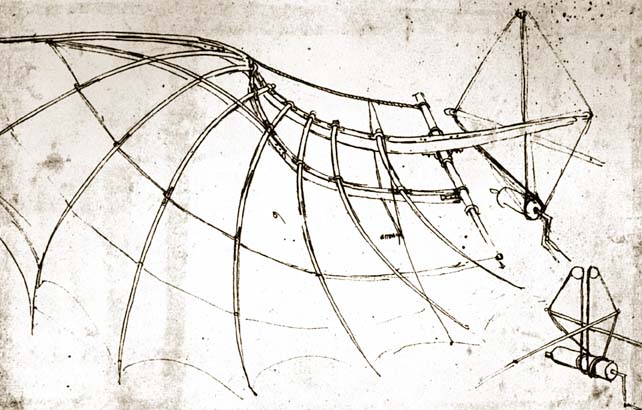
Leonado Da Vinci Flying Machine
Theo Jansen Shapeways 3D printed model 


Mine Kafon

"'Wind Knitting Factory' is a wind-powered knitting machine. The blades embrace more than a meter in diameter, and the wind caught by them powers the machine. In this way it is possible to knit a long scarf. When it is windy the machine knits fast and with less wind, the machine knits slowly. Occasionally the knitwear gets 'harvested' and transformed into scarves. Every scarf gets a label that tells you the date and time on which the wind made it. This mobile wind factory illustrates a production process and it visualises what you can produce with the present urban wind." 

Sunday, 9 March 2014

more PVA experiments

I decided to to a few more experiment to get a greater understanding of the limitations of the compound.

my first experiment I put it into nail polish remover to see if it would react with the Acetone but nothing happened, over the space of three hours the acetone evaporated and the PVA pallets were left behind, they had become sticky like when reacted in water but it did not dissolve into the acetone.
I next wanted to see what would happen if I dissolved the PVA in water then used the milky substage and interacted it with other materials. I first tried paper, and poured the solution onto the paper, I felt that it didn't really react with the paper, it socked through the paper like any other liquid but then just sat on top and did its own thing, when dried it have the paper some stiffness and a shine to it, but nothing noticeably interesting.
I then tried the same technique but with cellophane, I tried pouring the solution onto the cellophane and painting it on with a paint brush and then left them to dry, like the paper nothing unusual happened with this reaction, the PVA didn't change the retain between water and cellophane. 

I then decided I will play around with colours so I used some of my PVA solution and mixed it with water colour paints and then applied it to paper. this reaction turned out more interesting as when it dried it didn't sock into the paper like water colored paints would on there own, it had some depth to it and sat slightly above the page, it was crisp and had a shine. 
I next wanted to see what would happen it I mixed the solution with dishwashing liquid, not much changed with the reactive properties but I wanted to see what would happen when you put bubbles though it because when you put bubbles though just PVA and water nothing formed, so I forced air though the solution and bubbles formed, I was hoping for them to stay up for longer but they popped shortly after, I felt that PVA didn't change the reaction and it would of happen regardless of PVA being in the solution. 
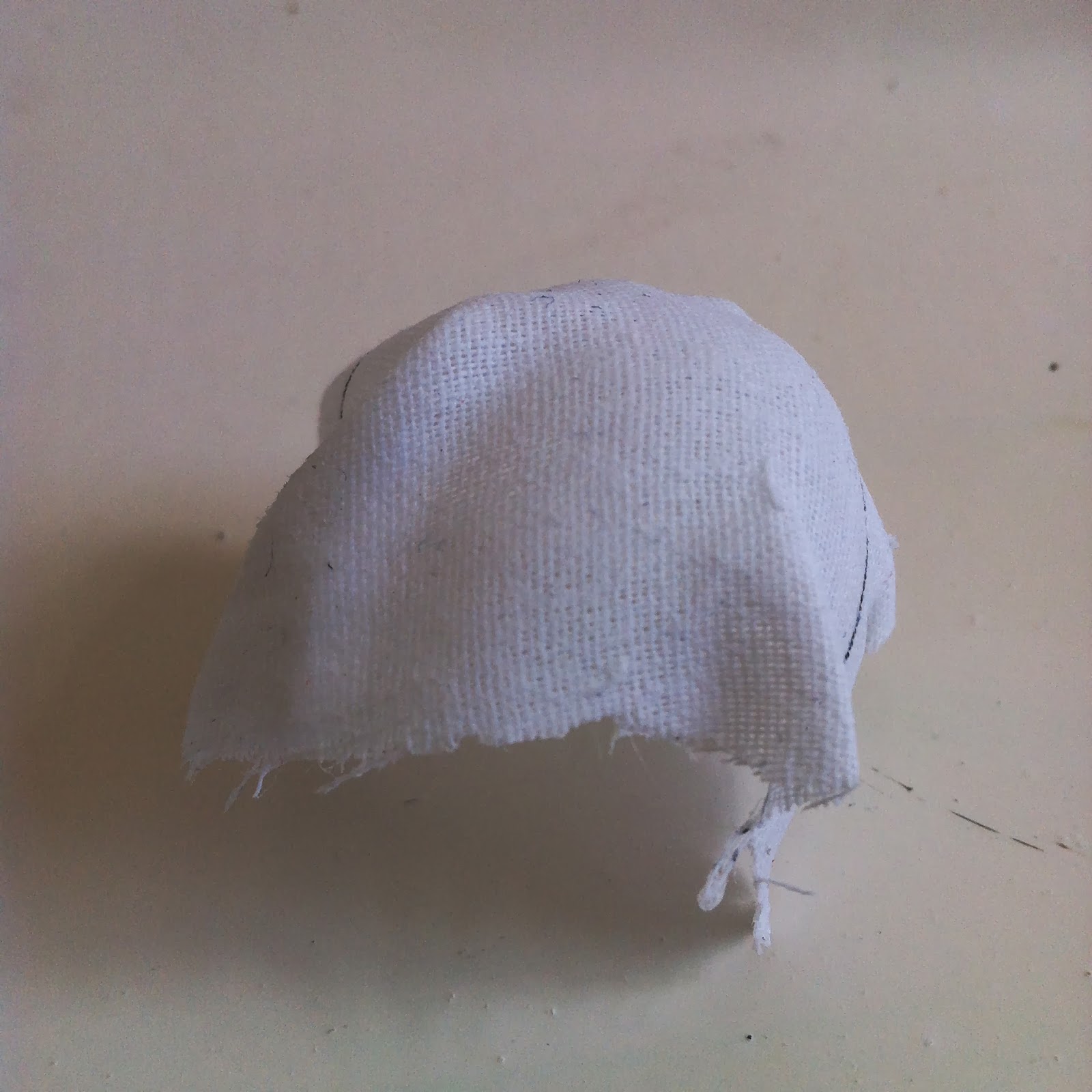
My last experiment i found quite interesting and unique, for this I got sheets of cloth and dipped them in the water and PVA solution and then dried them with a hair drier to decrease the drink process. I found that it would drying in the position that you formed it in, for example I dried one of the cloth  pieces over a circular lid and when it tried it was formed in the shape, it also has some give in the movement you could move it gently and it will come back to the position, I also tried coloring it with water paint and it colored well. the only problem I found it that you couldn't layer it. The PVA didn't act as a glue, when laying up the sheets and then letting them dry it was easy to pull them apart from each other. It was more like origami you could fold the cloth but you couldn't bound them together. 


Wednesday, 5 March 2014

PVA Ideas

I wanted to think of different ideas to use PVA in different contexts, I found that this was quite a hard thing to think off, I knew that it was food safe but should avoid swallowing the compound.
I came across this cool Idea called Moss Graffiti where you use moss to crate an organic may to crate Art on a space. I thought that if people didn't like it they could just spray it down and it would wash away so I thought you could use this concept with PVA and you could find away you make graffiti with it and over time the PVA wold dissolve with the rain water and wash away therefore it would per permeant and the space could be used for something else.
 The problem that I would find with PVA is the look of it, the reason why I found the moss graffiti so intriguing was the fact that it was an organic art form and it uses both human and nature to crate it, while if you did the same with PVA it is only human input. it also would look as visually appealing being the colour and texture it is, you would have to come up with a way to make it different colours and to not make it so sticky when it is racing with the water.
 

Polyvinyl Alcohol.

For this assignment was have to experiment with the chemical compound of Polyvinyl Alcohol (PVA) A colourless, water-soluble synthetic resin. 
To see how it worked I wanted to see its featuers in action:
Polyvinyl Alcohol
First I wanted to see how long it took for PVA to dissolve in water. I cut a small piece (less then 1cm squared) and placed it into a small dish of distilled water, I thought it wouldn't take very long for the reaction to occur, but in the first five minutes nothing happened I even tried moving the water around to make the reaction work faster but it still didn't dissolve, but when touching it, it was no longer smooth and hard but more flexible and slightly sticky and gluey. I then left it for three hours and came bak and it had finally dissolved and made the water no longer clear but a milky colour and then over night the water then separated and the PVA had fallen to the bottom and settled. 
textuer when reacted with water
In water
over night the PVA had separated from the water

The next Idea I wanted to look in to was to see if I could get the PVA to work into a paste by only using a little about of water. After time the PVA did dissolve into the limited amount of water making it  into a sticky and gluey texture but it still held its form and was not forming a paste. Over night the water  evaporated from the PVA resulting in the PVA that had dissolved into the water to harden back into the solid state, but in a thiner form. I found this pro sees rather interesting as you could use this concept to make the PVA into different forms and thicknesses by evaporating the water. 
in limited water
over night after water had evaporated

Next I wanted to see if PVA was soluble in other liquids, the two I tried was oil and salt water, I put the same sized piece of PVA that I put into the water to see if in the same time frame would anything happen. I have had the PVA in the solutions for three days now and no reaction has started to occur. this then proves that PVA is not soluble in salt water or oil. this could help in my design as I know how to prevent the reaction if I don't want the reaction to happen for some reason.  
PVA in oil
PVA in salt water
I had also heard that PVA burns like paper, I would of really liked to try this but I don't own matches or a lighter, but I think it was some good inside to know that PVA is flammable. When I get my hands on a lighter I will give it a try.

Wednesday, 16 October 2013

1000 words


Comfort and tying your shoelaces

From research it is suggested that there are two different types of comfort, psychological and physical. "Comfort is a pleasant state of psychological and physical harmony between a human being and his or her environment" (Slater, 1985). Psychological is where you are comfortable with the surrounding mentally, you feel reassured and safe; it plays off your memories, trust and relationships. This type of comfort takes a long time to create and is studied a lot with nurse where they try to create an environment for a patient to feel comfortable. Comfort with nurses is described ‘that comfort is the overall role that nurses have to focus on and to achieve this they have to first identify patients’ perceptions of their needs’ (Orlando, 1961), it is also the process to developing a close relationship with the patient which can result in healing and growth (Hall, 1964). A study by Elizabeth Tutton (2004) outlined how nurses perceive comfort and how they create comfort for their patients, the study showed that comfort was an individual process in which every one is different, and the staff needed to find out the patients wants and wishes to fulfill them. It was found that the patients felt more comfortable when the nurses had more positive attributes such as; kindness, gentleness, goodness and friendliness. It was found that comfort was also created when the nurse knows the patient, their background, likes and dislikes and simple facts about them, as this created a sense of normality.

Physical comfort is identified where you feel comfortable from and physical product or service. This type of comfort is taken for granted as people only feel comfortable after discomfort (Farrell, 2009) and this comfort is only temporary and last a short amount of time. I understand that this comfort only last for the length of the kinetic movement such as rubbing a soft surface, once you have stopped rubbing the soft surface the comfortable sensation stops. Physical comfort is integrated in industrial design with projects such as creating a chair that is comfortable, rather than an uncomfortable chair. “There are at least three design issues that need consideration in striving for comfort; Firstly, the exact cause of discomfort or comfort is unknown; there is no model available that describes the cause of comfort. Secondly, every individual has his or her own meaning of comfort, as it is a subjective phenomenon. Thridly, the comfort design process is not described and the approach is unknown" (Vink, 2005).
When considering comfort, Looze et al. (2003) described that there were three manifestations for considering: "Discomfort: the participant experiences discomfort because of physical disturbances in the environment. No discomfort: the participant is not aware of discomfort or comfort or there is no discomfort. Comfort: the participant experiences noticeably more comfort than expected and feels comfortable."  Looze et al, (2003:p 990) .The model explains the different factors that interact on resulting the design of the object, creating different manifestations; it described that you not only had to feel physically comfortable but other factors acted influence this, such as temperature, humidity, noise, state of the person, history and smell. "The history of our comfort experiences determines our expectations of a product based on what we are used to" (Looze et al. 2003: p991) this links to the physiological aspects of comfort and person memories. A study by Zhang et al. (1996) found that the absence of discomfort did not result in comfort. It showed that discomfort was associated with pain and if that was taken away then nothing was experienced, while comfort is related to the sense of well being and the pleasure the chair gives; discomfort highlights more physical aspects, such as pain, ache, hurting while comfort shows more of the mental aspects such as feeling happy, relaxed, safe, calm and restful. 

My interpretation with regard to these two different two types of comfort is the concept of time; as it takes a long time to create a safe, relaxed, comfortable environment to generate the sensation of mental comfort. Where as, physical comfort only lasts a few seconds, and when you stop moving, smelling  or listening to the experience of physical comfort, you then lose the focus on comfort and will then only consider comfort again when the action or product is deemed uncomfortable. The factor of time then becomes a big issue of making the experiment, as you have to allow for time to create both mental and physical comfort. 

A theory was devised; it was important to have two parts of the experience. As humans, we take the physical aspects of comfort for granted and because of this it is not practical to create physical comfort only to try to prevent physical discomfort. Preventing physical discomfort will act as a catalyst to creating physiological comfort. Making a comfortable environment using memories, safety, relaxation and positive attributes will create physiological comfort.

I wanted to make an experience to represent the actions of putting on and tying your shoes in a comfortable way. I feel that comfort is simple but meaningful, it’s a feel that you don't want to over power as then I feel it loses its meaning, so I wanted an experience that doesn’t have too many gadgets.


Initially I created an environment to prevent physical discomfort by using soft fabrics and textures such as fur, satin and having soft padding in the shoe. I enlarged the action of tying your shoes to emphasize what is being done; I still wanted to keep it in the feet region. I feel that is a main part of the act of putting on your shoes is the bending down so there is that connection will use your whole body.  I wanted this part of my experience to show a large amount of comfort, as I feel I there is more of a physical comfort rather then a mental comfort to tying up your shoes (and mostly touch) In making this I used soft materials, two soft pieces of padding were sewn together that can be laced up, this covered the whole leg making the experience more enlarged. These soft materials prevented an uncomfortable experience physically and also manipulated the actions on tying up your shoes. Also lined the bottom with a soft fur fabric to create physical comfort and it also created a warm environment inside that helped to make it more psychologically comfortable.

To create physiological comfort I will look at smell, the visual look of the experience and the way I act when presenting it. Vink (2005) reported that even though we are mostly not aware of the effect that smell has on us with comfort it actually influences our experiences. Therefore smell can trigger past memories and if the memory is comforting it can stimulate the feeling. Personally the smell of lavender is comforting so I used the aroma on the object to help stimulate the physiological sense of comfort. Another physiological comfort factor is the visual look of the object; this plays on the idea on memory and history with other objects. I felt an object looks comfortable with the shapes the form creates, soft, fluid, rounded shapes and also the colours used. As I was trying to keep the model simple and not over powering I made the whole model pure white and used soft fluid fabrics to make it so it looks comfortable before sitting on it and using it. Nurses fundamentally use comfort as part of their professional work, I wanted to try and use their type of personality of make the experience more mentally comfortable being; friendly, gentle and kind. Time is also an important factor of comfort, for this the experiment was kept short and simple as I felt that the user would start loosing the comfortable feeling if it kept going for too long, so it only lasted about two minutes.

Hall L.E. (1964) Nursing – What is it? The Canadian Nurse 60, 150– 155.
James J Farrell. (2009). Comfort. The Clergy Journal, 85(3), 46.

Looze, M.P. de, Kuijt-evers, L.F.M and Dieen, J.H. van (2003), sitting comfort and discomfort and the relationships with objective measures. Ergonomics, 46:985-997

Orlando I. (1961) The Dynamic Nurse–Patient Relationship: Function, Process and Principles. G P Putnam’s Sons, New York.
Slater, K. (1985) Human Comfort, Springfield IL: Charles C. Thomas.

Tutton, E., & Seers, K. (2004). Comfort on a ward for older people. Journal of Advanced Nursing, 46(4), 380-389. doi:10.1111/j.1365-2648.2004.03005.x

Vink, P. (2005). Comfort and design: Principles and good practice. Boca Raton: CRC Press.

Zhang, L. Halander, M.G. Drury, C.G. (1996). Identifying factors of comfort and discomfort in sitting. Human Factors, 38(3): 377-389

photos


The design.

I want to make an experience to represent the actions of putting on and tying your shoes in a comfortable way. I feel that comfort is simple but meaningful, its a feel that you don't want to over power as then i feel it loses its meaning, so I want an experence that dosent have to many gadgets.

  •  my first part is to enlarge the action of tying your shoes to emphasize what is being done, I still want to keep it in the feet region as I fell that a main part of the act of putting on your shoes is the bending down so there is that connection will using your whole body. really wanted this part of my experience to show a large amount of comfort, as I feel i there is more of a physical connection rather then a mental connection to tying up your shoes (and mostly touch) I wanted to have a stronger connection with the prevention of physical discomfort in this part of the experience. in making this I will use soft materials, two soft paddings sewn tougher that can be laced up, this would cover the whole leg making the experience more enlarged, to make this I will make it from two pillows and three pillowcase all sewn together, two of the cases will hold the pillows and the other will act as the tongue will large satin ribbon to tie it up. all of these soft materials will prevent an uncomfortable experience physically and also manipulate the actions on tying up your shoes. I will also line the bottom of the incasing with a soft fur fabric the will create an initial physical comfort and it also create a warm environment inside the helps to make it more comfortable
  • when tying up your shoes you normally sit down, so I feel that the sitting down part of the experience is quite important, to prevent discomfort i will have the chair ergonomically comfortable  with the average sitting hight for the average sized person, to prevent pain and ache. I will also add padding to the chair to had even more support. the touch, warmth and ergonomics are all used to prevent physical discomfort. 
  • To create physiological comfort I will look at smell, the visual look of the experience and the way I act when presenting it. in one of the reading I found it explained that smell was a good way to crate comfort as it can trigger past memories and if a comforting memory will stimulate the feeling, I wanted to use this Idea as I personally find that the smell of lavender is a comforting smell, So I will cover the object in lavender oil to crate the memory. 
  • another physiological comfort factor is the visual look of the object, this plays on the idea on memory and history with other objects. I feel an object looks comfortable with the shapes the form creates, soft, fluid, rounded shapes and also the colours used, my personal preference on comforting colours are warm colours such as yellow, orange and white. as I am trying to keep the model simple and not over powering so I feel I will make the whole model pure white and will use soft fluid fabrics to make it so it looks comfortable before sitting on it and using it. 
  • when looking at how nurses use comfort, it is in their actions, even though it is over a long period of time for them to create their time of comforting actions to their patients i want to try and use their type of personality of make the experience more mentally comfortable; friendly, gentle, kind and friendly.
  • time is also a factor that I feel it a big part of comfort, I want to keep it short and simple as we take comfort for granted I feel that the user would start loosing the comfortable feeling it I keep it going for to long, so it should only last about 2 minutes.